
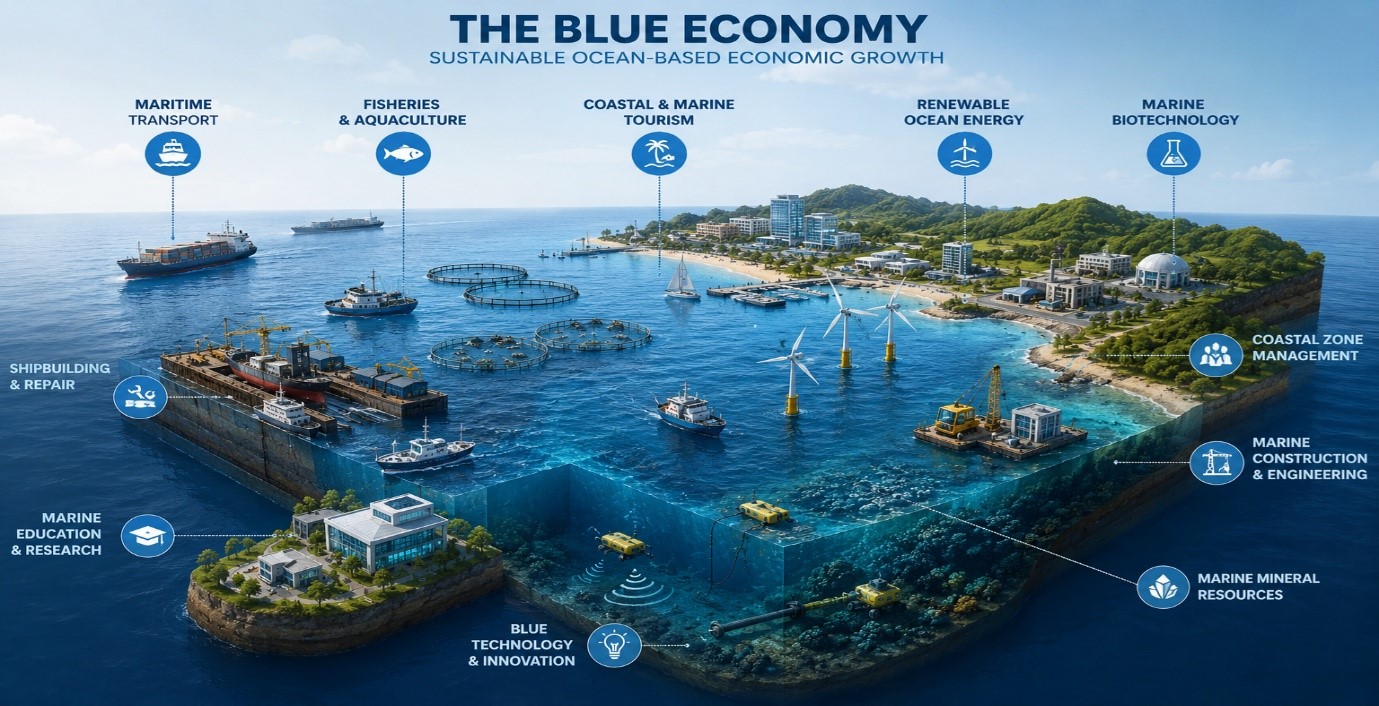
For decades, the world's oceans and seas were treated largely as backdrops to economic activity useful for shipping goods and catching fish, but rarely recognized as an economic sector in their own right. That thinking has shifted decisively. Today, the "blue economy", encompassing everything from fisheries and aquaculture to shipping, coastal tourism, offshore energy, and marine biotechnology is increasingly viewed as one of the most promising frontiers for sustainable growth, particularly for coastal nations seeking to diversify beyond traditional industries.
The numbers help explain why. Across Africa alone, ocean-linked industries already support nearly 50 million jobs and contribute an estimated $300 billion annually to the continent's economy, with vastly more potential still untapped. Africa's blue-economy footprint is staggering: more than 38 of its 54 nations hold sovereign rights over adjacent ocean territory, and the continent's exclusive economic zones span over 13 million square kilometres, backed by roughly 47,000 kilometres of coastline. Given the demographic profile of Africa's median age compared with Europe, labour-intensive blue sectors such as fisheries, maritime transport, and shipping could become major sources of youth employment in the coming years.
Why the Blue Economy Matters Now
Several factors have propelled this sector from a niche talking point to a mainstream policy priority. First, food security: fisheries and aquaculture remain a primary protein source for hundreds of millions of coastal inhabitants, and demand continues to climb alongside population growth. Second, climate resilience: healthy marine ecosystems, including mangroves, seagrass beds, and coral reefs absorb carbon, buffer coastlines against storms, and support biodiversity, making their protection both an economic and an environmental imperative. Third, economic diversification: countries over-reliant on oil, gas, or monocrop agriculture are increasingly turning to ports, shipping, marine tourism, and renewable ocean energy to build more resilient economies. Finally, geopolitics: control over maritime trade routes, undersea data cables, and offshore resources has become a strategic consideration for governments worldwide, not merely an economic one.
None of this is automatic, however. Realizing the blue economy's potential demands governance, financing, and infrastructure resources that many countries, including several in Africa, are still working to build. A recent investigation into Nigeria's dedicated Blue Economy Ministry, for instance, found it operating with only a small fraction of the funding needed to address the sector's estimated 72-trillion-naira financing gap (about $45–$50 billion US), a stark illustration of how far ambition can outpace on-the-ground investment.
The situation in southern Mediterranean
The region flanks the Mediterranean, one of the world's busiest and most ecologically significant seas, while Morocco and Mauritania also open onto the Atlantic. Egypt alone controls the Suez Canal, arguably the single most important maritime chokepoint for global trade. This geography alone grants the region outsized relevance in any discussion of ocean-based economic growth.
Morocco has emerged as one of the region's more active players, advancing the WestMED initiative, a Mediterranean-wide effort launched in 2017 that brings together five EU countries and five North African partner states (Algeria, Libya, Mauritania, Morocco, and Tunisia) to coordinate sustainable blue-growth strategies. Morocco was also notably the country whose ratification pushed the UN's High Seas Treaty (the Biodiversity Beyond National Jurisdiction Agreement) past the threshold required for it to enter into force, a milestone reached in January 2026. Rabat has also invested heavily in expanding its fishing and aquaculture sectors along both its Mediterranean and Atlantic coasts.
Tunisia has directed significant attention toward sustainable fisheries management through programs such as MEDFISHTUN, an EU-backed initiative that promotes sustainable governance of the country's fish and aquaculture resources. Given the centrality of small-scale fishing communities to Tunisia's coastal economy, this support directly affects livelihoods, not merely macroeconomic aggregates.
Algeria has likewise received EU support aimed specifically at strengthening its fisheries and aquaculture sectors, as part of a broader regional push to modernize marine-resource management through joint action rather than isolated efforts.
Beyond the Suez Canal's outsized role in its blue economy, Egypt has been partnering internationally on multi-year programs (extending through 2027) aimed at strengthening nature conservation and sustainable resource management along its coastlines. This accompanies continued investment in its fisheries sector and Red Sea tourism, one of the country's most valuable and most climate-exposed economic assets.
Libya, despite years of political instability, remains a participant in regional frameworks such as WestMED and continues at least on paper to be part of Mediterranean-wide fisheries and marine governance efforts, though its enforcement and implementation capacity lags well behind its neighbours.
The Challenges Ahead
For all its momentum, North Africa's blue economy faces significant structural headwinds. Overfishing and illegal, unreported, and unregulated (IUU) fishing continues to strain Mediterranean fish stocks, a concern so serious that the UN's Food and Agriculture Organization has made ecosystem-based fisheries management a central regional priority through its Blue Transformation Roadmap, which runs to 2030. Marine pollution, coastal urbanization, and the pressures of climate change, including coastal subsidence increasingly documented in cities such as Alexandria add further complexity. Financing remains another persistent bottleneck: across the continent, blue economy ministries and agencies are frequently tasked with delivering ambitious national strategies without commensurate budgets, a mismatch that underscores just how underfunded even dedicated government bodies can be relative to the scale of the opportunity.
Looking Forward with Clear Eyes on What Still Stands in the Way
The momentum is real, but it would be a mistake to read it as evidence that the hard problems are close to being solved. Regional platforms such as the Union for the Mediterranean's Sustainable Blue Economy initiative, EU-backed programs like BlueInvest Africa, whose 2026 edition featured startups from Egypt, Morocco, and Tunisia pitching to international investors, and continent-wide efforts like the Great Blue Wall Initiative all signal a growing recognition that the sea is not merely a resource to extract, but a system that requires active stewardship if it is to keep yielding economic dividends. Recognition, however, is not the same as delivery.
Most of these platforms remain heavier on dialogue, pilot projects, and matchmaking events than on the large-scale, long-term financing the sector actually needs. Startup pitch competitions and stakeholder forums are useful for building networks and surfacing ideas, but they rarely close the gap between a national blue economy strategy on paper and the infrastructure, monitoring systems, and enforcement capacity required to make it real. That gap shows up starkly elsewhere on the continent, Nigeria's dedicated blue economy ministry, for instance, has been funded at a small fraction of what officials themselves say is required, and there is little reason to assume North African institutions are immune to the same mismatch between ambition and budget.
There are also harder structural constraints that no summit or investment forum can resolve on its own. Political instability continues to limit what countries like Libya can realistically implement, regardless of which regional frameworks they formally join. Overfishing and illegal fishing pressures in the Mediterranean are the product of decades of weak enforcement across multiple jurisdictions, not something a single initiative can reverse quickly. Coastal cities such as Alexandria face physical, slow-moving threats like land subsidence that sit largely outside the scope of blue economy programming altogether, yet directly undermine the coastal infrastructure that sector depends on. And regional cooperation, while improving, still runs up against differing national priorities, uneven administrative capacity, and financing structures that favor short project cycles over the sustained investment that ecosystem restoration and fisheries management actually require.
None of this erases the genuine progress underway, but it does mean the path forward is narrower and more uncertain than the language of summits and partnerships sometimes suggests. For North Africa with its Mediterranean and Atlantic coastlines, a critical global shipping chokepoint in the Suez Canal, and coastal populations whose livelihoods depend directly on marine health getting the balance right is not optional; it is fundamental to the region's long-term economic future. But getting there will likely depend less on the next platform or pledge, and more on whether governments can turn existing commitments into sustained funding, consistent enforcement, and institutions capable of outlasting the political cycles that have undermined similar efforts elsewhere on the continent.
References
African Union & United Nations Development Programme. (2025). Africa Blue Economy Week 2025: From Pledges to Stronger Partnerships. African Union Commission.
Kariuki, H., cited in Call for Bigger Investment in Africa's Blue Economy. (2026). Monaco Blue Initiative and Blue Economy and Finance Forum, Monte Carlo. AllAfrica.
Food and Agriculture Organization of the United Nations, General Fisheries Commission for the Mediterranean. (2026). The FishEBM Approach: Bridging Conservation and Coastal Livelihoods.
European Commission, Directorate-General for Maritime Affairs and Fisheries. Mediterranean Sea and the WestMED Initiative.
European Union External Action Service. (2026). Pact for the Mediterranean – Action Plan, Spring 2026.
Adegoke, K. (2026). Investigation: Nigeria's Blue Economy Ministry Gets ₦1 for Every ₦1,878 Required. TheDiggerNews.com.
Vanguard News. (2026). Africa's Blue Economy Is a Manufacturing Floor: It's Time to Claim It.
لعقود طويلة، كان يُنظر إلى محيطات العالم وبحاره في الغالب باعتبارها داعم للنشاط الاقتصادي، كونها مفيدة في نقل البضائع وصيد الأسماك، لكنها نادرًا ما اعتُبرت قطاعًا اقتصاديًا قائمًا بذاته. هذا التصور تغيّر بشكل حاسم. فاليوم، بات "الاقتصاد الأزرق" - الذي يشمل كل شيء بدءًا من مصايد الأسماك والاستزراع المائي، مرورًا بالنقل البحري والسياحة الساحلية، وصولًا إلى الطاقة البحرية والتقنية الحيوية البحرية - يُنظر إليه كأحد أكثر آفاق النمو المستدام الواعدة، ولا سيما بالنسبة للدول الساحلية الساعية إلى التنويع بعيدًا عن الصناعات التقليدية.
وتثبت الأرقام هذا التحول. ففي القارة الأفريقية وحدها، توفّر الصناعات المرتبطة بالمحيطات بالفعل ما يقارب خمسين مليون فرصة عمل، وتُسهم بنحو ثلاثمائة مليار دولار سنويًا في اقتصاد القارة، مع وجود إمكانيات أكبر بكثير لم تُستثمر بعد. وتُعد بصمة الاقتصاد الأزرق الأفريقي مذهلة؛ إذ تتمتع أكثر من ثمانٍ وثلاثين دولة من أصل أربع وخمسين دولة أفريقية بحقوق سيادية على المناطق البحرية التابعة لها، وتمتد المناطق الاقتصادية الخالصة للقارة على مساحة تتجاوز ثلاثة عشر مليون كيلومتر مربع، يدعمها ساحل يبلغ طوله نحو سبعة وأربعين ألف كيلومتر. وبالنظر إلى التركيبة السكانية في أفريقيا مقارنة مع أوروبا - فإن القطاعات الأزرق الكثيفة العمالة، كمصايد الأسماك والنقل البحري والشحن، قد تُصبح مصدرًا رئيسيًا لتشغيل الشباب في السنوات المقبلة.
لماذا يحظى الاقتصاد الأزرق بهذه الأهمية؟
ثمة عوامل عدة دفعت هذا القطاع من كونه موضوعًا هامشيًا إلى أولوية رئيسية على أجندة السياسات العامة. أولها الأمن الغذائي، إذ لا تزال مصايد الأسماك والاستزراع المائي مصدرًا رئيسيًا للبروتين لدى مئات الملايين من سكان السواحل، ويستمر الطلب عليهما في التصاعد مع النمو السكاني. وثانيها الصمود في مواجهة تغيّر المناخ، فالنظم البيئية البحرية السليمة - كأشجار المانغروف والأعشاب البحرية والشعاب المرجانية - تمتص الكربون، وتحمي السواحل من العواصف، وتدعم التنوع البيولوجي، ما يجعل حمايتها ضرورة اقتصادية بقدر ما هي ضرورة بيئية. وثالثها تنويع مصادر الاقتصاد، فالدول التي تعتمد اعتمادًا مفرطًا على النفط أو الغاز أو الزراعة الأحادية المحصول تتجه بشكل متزايد نحو الموانئ والشحن والسياحة البحرية والطاقة المتجددة البحرية سعيًا لبناء اقتصادات أكثر مرونة. وأخيرًا، البُعد الجيوسياسي، إذ باتت السيطرة على طرق التجارة البحرية والكابلات البحرية للبيانات والموارد البحرية اعتبارًا استراتيجيًا لدى الحكومات في مختلف أنحاء العالم، وليست مجرد مسألة اقتصادية بحتة.
غير أن لا شيء من ذلك سيتحقق تلقائيًا. فاستثمار إمكانات الاقتصاد الأزرق يستلزم حوكمة رشيدة وتمويلًا كافيًا وبنية تحتية مناسبة، وهو مايفتقده العديد من الدول الأفريقية. وقد كشف تحقيق صحفي حديث حول وزارة الاقتصاد الأزرق المخصصة في نيجيريا أنها تعمل بجزء ضئيل فحسب من التمويل اللازم لسد الفجوة التمويلية في هذا القطاع، والمقدَّرة بنحو اثنين وسبعين تريليون نايرا (أي ما يعادل تقريبًا خمسة وأربعين إلى خمسين مليار دولار أمريكي)، وهو ما يُجسّد بوضوح مدى اتساع الفجوة بين المطلوب والاستثمار الفعلي على أرض الواقع.
أين تقف منطقة جنوب المتوسط ؟
هذه المنطقة تطل على البحر الأبيض المتوسط، أحد أكثر بحار العالم ازدحامًا وأهمية من الناحية البيئية، في حين تطل المغرب وموريتانيا أيضًا على المحيط الأطلسي. وتتحكم مصر وحدها في قناة السويس، التي يمكن اعتبارها أهم نقطة اختناق بحرية بالنسبة للتجارة العالمية. وهذا الموقع الجغرافي وحده يمنح المنطقة أهمية بالغة في أي نقاش يتعلق بالنمو الاقتصادي القائم على المحيطات.
وقد برزت المغرب بوصفها أحد أكثر الفاعلين نشاطًا في المنطقة، إذ مضت قُدمًا في مبادرة "ويست ميد" (WestMED)، وهي جهد إقليمي شامل للبحر الأبيض المتوسط أُطلق عام 2017، يجمع بين خمس دول أوروبية وخمس دول شريكة من شمال أفريقيا (الجزائر وليبيا وموريتانيا والمغرب وتونس) بهدف تنسيق استراتيجيات النمو الأزرق المستدام. ويُذكر أن المغرب كانت الدولة التي دفع تصديقها معاهدة أعالي البحار التابعة للأمم المتحدة (اتفاقية التنوع البيولوجي فيما وراء حدود الولاية الوطنية) إلى تجاوز العتبة اللازمة لدخولها حيز التنفيذ، وهو إنجاز تحقق في يناير من عام 2026. كما استثمرت الرباط استثمارًا كبيرًا في توسيع قطاعي الصيد والاستزراع المائي على سواحلها المتوسطية والأطلسية على حد سواء.
أما تونس فقد وجّهت اهتمامًا كبيرًا نحو الإدارة المستدامة لمصايد الأسماك من خلال برامج من قبيل "ميدفيشتون" (MEDFISHTUN)، وهي مبادرة مدعومة من الاتحاد الأوروبي تُعنى بتعزيز الحوكمة المستدامة لموارد البلاد من الأسماك والاستزراع المائي. ونظرًا للمكانة المحورية التي تحتلها مجتمعات الصيد الصغيرة في الاقتصاد الساحلي التونسي، فإن هذا الدعم ينعكس مباشرة على سبل معيشة السكان، لا على المؤشرات الاقتصادية الكلية فحسب.
وحصلت الجزائر بدورها على دعم من الاتحاد الأوروبي موجَّه تحديدًا نحو تعزيز قطاعي الصيد والاستزراع المائي لديها، في إطار توجّه إقليمي أوسع نطاقًا يرمي إلى تحديث إدارة الموارد البحرية عبر العمل المشترك بدلًا من الجهود المنفردة.
وإلى جانب الدور البالغ الأهمية الذي تؤديه قناة السويس في اقتصادها الأزرق، تعمل مصر بالشراكة مع جهات دولية على برامج متعددة السنوات (تمتد حتى عام 2027) تهدف إلى تعزيز حفظ الطبيعة والإدارة المستدامة للموارد على امتداد سواحلها. ويقترن ذلك باستمرار الاستثمار في قطاع الصيد وفي السياحة بمنطقة البحر الأحمر، التي تُعد أحد أثمن الأصول الاقتصادية للبلاد وأكثرها عرضة لتأثيرات تغيّر المناخ.
أما ليبيا، فعلى الرغم من سنوات من عدم الاستقرار السياسي، لا تزال طرفًا مشاركًا في أطر إقليمية مثل "ويست ميد"، وتظل، على الأقل من الناحية الشكلية، جزءًا من جهود حوكمة مصايد الأسماك والشؤون البحرية على مستوى البحر الأبيض المتوسط، وإن كانت قدرتها على الإنفاذ والتنفيذ تتخلف كثيرًا عن نظيراتها من دول الجوار.
التحديات القائمة
على الرغم من هذا الزخم كله، يواجه الاقتصاد الأزرق في شمال أفريقيا معوقات هيكلية جسيمة. فالإفراط في الصيد والصيد غير القانوني وغير المُبلَّغ عنه وغير المنظَّم لا يزال يُجهد المخزون السمكي في البحر الأبيض المتوسط، وهو أمر بالغ الخطورة إلى الحد الذي جعل منظمة الأغذية والزراعة التابعة للأمم المتحدة تُعلي من شأن الإدارة البيئية لمصايد الأسماك كأولوية إقليمية محورية، عبر خارطة طريقها المعنونة "التحول الأزرق"، والممتدة حتى عام 2030. ويزيد من تعقيد المشهد كل من التلوث البحري، والتمدد العمراني الساحلي، وضغوط تغيّر المناخ، بما في ذلك ظاهرة هبوط الأراضي الساحلية التي باتت موثَّقة على نحو متزايد في مدن كالإسكندرية. ويبقى التمويل عائقًا مستمرًا آخر، إذ كثيرًا ما تُكلَّف وزارات وهيئات الاقتصاد الأزرق في مختلف أرجاء القارة بتنفيذ استراتيجيات وطنية طموحة دون أن تُخصَّص لها ميزانيات تتناسب معها، وهو تفاوت يُبرز مدى ضآلة تمويل حتى الهيئات الحكومية المخصصة لهذا الغرض، مقارنةً بحجم الفرصة المتاحة.
نظرة إلى المستقبل وما يعترضه من عقبات
هذا الزخم حقيقي، غير أنه سيكون من الخطأ تفسيره على أنه دليل على قرب حل المشكلات الجوهرية. فمنصات إقليمية من قبيل مبادرة الاقتصاد الأزرق المستدام التابعة للاتحاد من أجل المتوسط، وبرامج مدعومة من الاتحاد الأوروبي كـ"بلوإنفست أفريقيا"، التي ضمت نسختها لعام 2026 شركات ناشئة من مصر والمغرب وتونس عرضت مشاريعها على مستثمرين دوليين، إلى جانب جهود قارية شاملة مثل مبادرة "الجدار الأزرق العظيم"، كلها تُشير إلى إدراك متنامٍ بأن البحر ليس مجرد مورد يُستغل، بل نظام يتطلّب إشرافًا فعالًا إن أُريد له أن يستمر في تحقيق عوائد اقتصادية. غير أن الإدراك شيء، والتنفيذ الفعلي شيء آخر مختلف تمامًا.
فمعظم هذه المنصات لا تزال تُركّز بشكل أكبر على الحوار والمشروعات التجريبية وفعاليات التوفيق بين الأطراف، أكثر من تركيزها على التمويل الكبير طويل الأمد الذي يحتاجه القطاع فعليًا. صحيح أن مسابقات عرض المشروعات الناشئة والمنتديات الحوارية مفيدة في بناء الشبكات وطرح الأفكار، إلا أنها نادرًا ما تسدّ الفجوة بين استراتيجية وطنية للاقتصاد الأزرق قائمة على الورق، والبنية التحتية وأنظمة الرصد وقدرات الإنفاذ اللازمة لتحويلها إلى واقع ملموس. وتتجلى هذه الفجوة بوضوح في مواضع أخرى من القارة؛ فوزارة الاقتصاد الأزرق النيجيرية المخصصة، على سبيل المثال، لم تحصل إلا على جزء ضئيل مما يقرّ المسؤولون أنفسهم بأنه مطلوب، ولا يوجد ما يدعو إلى افتراض أن المؤسسات في شمال أفريقيا في مأمن من التفاوت ذاته بين الطموح والميزانية.
كما توجد قيود هيكلية أكثر صعوبة لا يمكن لأي قمة أو منتدى استثماري أن يحلّها بمفرده. فعدم الاستقرار السياسي لا يزال يحدّ مما يمكن لدول كليبيا أن تُحققه بشكل واقعي، بصرف النظر عن الأطر الإقليمية التي تنضم إليها رسميًا. كما أن ضغوط الإفراط في الصيد والصيد غير المشروع في البحر الأبيض المتوسط هي نتاج عقود من ضعف الإنفاذ عبر ولايات قضائية متعددة، وليست مشكلة يمكن لمبادرة واحدة أن تعكس مسارها في وقت قصير. وتواجه مدن ساحلية كالإسكندرية تهديدات فيزيائية بطيئة التطور، كهبوط الأراضي، تقع إلى حد كبير خارج نطاق برامج الاقتصاد الأزرق أصلًا، رغم أنها تُقوّض بشكل مباشر البنية التحتية الساحلية التي يعتمد عليها هذا القطاع. أما التعاون الإقليمي، فعلى الرغم من تحسّنه، لا يزال يصطدم بتباين الأولويات الوطنية، وتفاوت القدرات الإدارية، وهياكل تمويل تُفضّل دورات المشروعات القصيرة على الاستثمار المستدام الذي تتطلبه فعليًا عمليات استعادة النظم البيئية وإدارة مصايد الأسماك.
ولا يعني شيء من ذلك إنكار التقدم الحقيقي الجاري إحرازه، غير أنه يعني أن الطريق إلى الأمام أضيق وأكثر عدم يقين مما توحي به أحيانًا لغة القمم والشراكات. فبالنسبة لشمال أفريقيا - بسواحلها المتوسطية والأطلسية، ونقطة الاختناق البحرية العالمية الحيوية المتمثلة في قناة السويس، والمجتمعات الساحلية التي تعتمد سُبل معيشتها اعتمادًا مباشرًا على سلامة البيئة البحرية - فإن تحقيق هذا التوازن ليس أمرًا اختياريًا، بل ضرورة جوهرية لمستقبل المنطقة الاقتصادي على المدى الطويل. غير أن الوصول إلى ذلك لن يتوقف على منصة جديدة أو تعهد إضافي بقدر ما سيتوقف على مدى قدرة الحكومات على تحويل الالتزامات القائمة إلى تمويل مستدام، وإنفاذ متّسق، ومؤسسات قادرة على الصمود بعد انقضاء الدورات السياسية التي قوّضت جهودًا مماثلة في مواضع أخرى من القارة.
المراجع
الاتحاد الأفريقي وبرنامج الأمم المتحدة الإنمائي. (2025). أسبوع الاقتصاد الأزرق الأفريقي 2025: من التعهدات إلى شراكات أقوى. مفوضية الاتحاد الأفريقي.
كاريوكي، هـ.، ورد في دعوة لزيادة الاستثمار في الاقتصاد الأزرق الأفريقي. (2026). مبادرة موناكو الزرقاء ومنتدى الاقتصاد الأزرق والتمويل، مونت كارلو. AllAfrica.
منظمة الأغذية والزراعة للأمم المتحدة، اللجنة العامة لمصايد أسماك البحر الأبيض المتوسط. (2026). نهج FishEBM: الربط بين الحفاظ على البيئة ومعيشة السواحل.
المفوضية الأوروبية، المديرية العامة للشؤون البحرية ومصايد الأسماك. البحر الأبيض المتوسط ومبادرة WestMED.
دائرة العمل الخارجي للاتحاد الأوروبي. (2026). ميثاق البحر الأبيض المتوسط - خطة العمل، ربيع 2026.
أديغوكي، ك. (2026). تحقيق: وزارة الاقتصاد الأزرق النيجيرية تحصل على 1 نايرا مقابل كل 1878 نايرا مطلوبة. TheDiggerNews.com.
فانغارد نيوز. (2026). الاقتصاد الأزرق الأفريقي هو أرضية تصنيع: حان وقت المطالبة به.